


Cargo Worthy vs Wind & Watertight: Which Grade Should You Buy?
Buy Cargo Worthy (CW) if you need to ship, stack, or crane-lift the container. Buy Wind & Watertight (WWT) if you only need stationary, weatherproof storage on the ground. That single rule covers the majority of buying decisions.
Typical buyer personas:
- Shipper, exporter, or freight operator moving goods internationally → CW, full stop. You need the CSC plate and structural certification.
- Depot operator or logistics yard stacking units or handling loaded lifts → CW. Structural integrity under load is non-negotiable.
- Homeowner, job-site manager, or on-site storage buyer keeping the box in one place → WWT saves you money with the same weather protection.
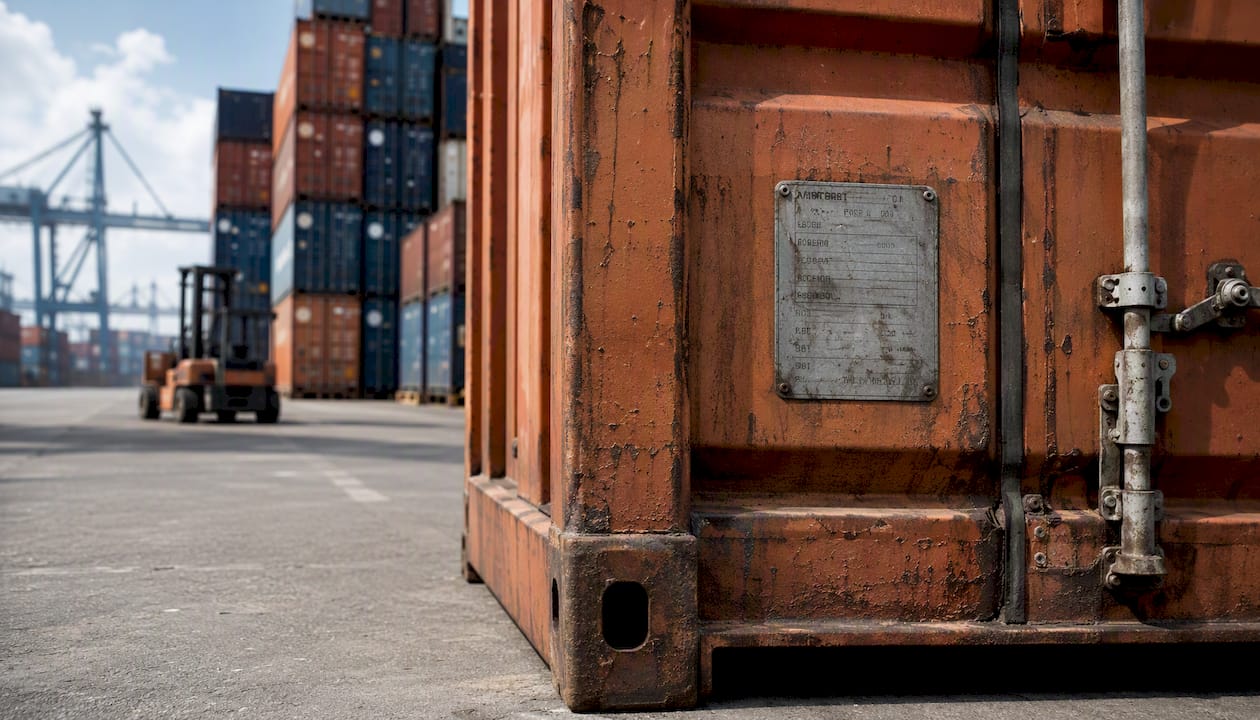
Before paying a CW premium, photograph the CSC plate on the left door and confirm the next-examination date has not expired. An expired plate means the container is not currently certified for export, regardless of what the seller calls it.
Key Takeaways
Cargo Worthy and Wind & Watertight serve different purposes: CW is the only legal choice for export, stacking, or crane lifts, while WWT is the cost-effective option for stationary ground-level storage.
| Point | Details |
|---|---|
| CW for transport, WWT for storage | CW is required for export and stacking; WWT is sufficient for stationary, ground-level use. |
| Verify the CSC plate first | Photograph the left-door CSC plate and confirm the next-examination date before paying a CW premium. |
| Price gap is real but modest | CW units typically cost several hundred dollars more than comparable WWT units of the same size. |
| Conversion math matters | WWT-to-CW recertification is cost-effective only for minor repairs; major structural work often makes buying CW outright cheaper. |
| Document everything | Keep the CSC plate photo, surveyor report, and condition report with your bill of sale for permit and resale protection. |
Table of Contents
- What does “Cargo Worthy” actually mean for buyers?
- What does “Wind & Watertight” actually mean?
- How do CW and WWT compare on the dimensions that matter?
- How are CW and WWT containers inspected and verified?
- What should you inspect in person before buying?
- What price difference should you expect, and when does repair make sense?
- Which grade fits your specific goal?
- Expert notes on COA TG-01 and what U.S. buyers should document
- A practical perspective on getting this decision right
- Sources
What does “Cargo Worthy” actually mean for buyers?
Cargo Worthy is a structural designation, not a cosmetic grade. A CW container has passed an inspection confirming it is fit for intermodal transport: it can be loaded, stacked, crane-lifted, and shipped internationally. The legal hook is the International Convention for Safe Containers (CSC), which governs containers used in international transport and requires a valid CSC plate as evidence of compliance.
The Container Owners Association’s technical guidance document, COA TG-01, defines the specific criteria inspectors and depot operators use to assess cargo-worthiness. It covers structural repair standards, acceptable tolerances, and what components must be sound before a container earns the designation.
What a CW inspection focuses on:
- Corner castings and corner posts (the load-bearing skeleton of the box)
- Floor integrity, including cross-members and bearer condition
- Door operation, hinges, locking rods, and gasket seal
- Roof panels for holes, significant deformation, or weld failures
- Weld integrity on all structural joints
- Twist-lock fit and lifting point condition
One point buyers consistently miss: CW is a structural and inspection status, not a cosmetic standard. A CW unit can show surface rust, dents, and faded paint. None of that disqualifies it. What matters is whether the structure holds under transport loads. Always request the CSC plate photo and any available surveyor report before finalizing a purchase.
What does “Wind & Watertight” actually mean?
WWT is a simpler, narrower guarantee. The seller is confirming that no wind or rain enters the container under normal conditions: the roof is intact, the door seals hold, and the panels have no open holes. That is the entire promise. There is no CSC certification, no marine surveyor sign-off, and no structural assessment for stacking or lifting loads.
Common characteristics of WWT units:
- Older age, often 12–20 years, with visible wear
- Patched or repaired panels (acceptable for weatherproofing, not for structural certification)
- Floor wear, possible soft spots, and surface corrosion
- Corner casting or understructure issues that were not evaluated for shipping fitness
WWT containers are typically sold by depots retiring units from active shipping service. They are cheaper because the seller is not warranting anything beyond keeping rain out. For a buyer who only needs static, ground-level storage, that is a perfectly reasonable trade. The risk profile is low as long as the box stays on the ground and never gets stacked or loaded onto a vessel.
How do CW and WWT compare on the dimensions that matter?
| Dimension | Cargo Worthy (CW) | Wind & Watertight (WWT) |
|---|---|---|
| Allowed use | Export, intermodal transport, stacking, crane lifts | Land-based stationary storage only |
| Certification required | CSC plate + marine surveyor inspection | Yard check for weatherproofing only |
| Structural condition | Corner castings, floor, posts assessed and sound | Not structurally assessed for load or stacking |
| Watertightness | Confirmed (part of inspection) | Confirmed (primary guarantee) |
| Typical seller price | Higher (CW premium of several hundred dollars) | Lower |
| Common repairs | Structural welding, floor replacement, casting repair | Panel patching, gasket replacement, cosmetic work |
| Buyer verification docs | CSC plate photo, surveyor report, bill of sale | Condition report, photos, bill of sale |
A few things worth noting when reading that table. The stacking column is the most consequential: if your yard ever needs to double-stack units or a crane will lift the box loaded, WWT is not a safe choice regardless of price. The resale value gap also matters for businesses. A CW unit retains export eligibility and commands a higher resale price; a WWT unit does not. For buyers who might sell the container in two or three years, the CW premium often pays back.
How are CW and WWT containers inspected and verified?
CW certification requires a marine surveyor or accredited inspector to physically assess the container against structural criteria. The COA TG-01 guidance document is the practical reference surveyors use: it specifies that structural repairs must be welded (not patched with bitumen or tape), that straightening tolerances apply to deformed members, and that cannibalized components from other containers are acceptable if they match the original specification and thickness.
What a marine surveyor checks for CW re-certification:
- Corner casting faces and apertures (twist-lock engagement)
- Floor bearing capacity and cross-member condition
- Weld integrity on all structural joints
- Door gaskets, hinges, and locking rod alignment
- Roof for deformation or penetrating rust
- Overall structural geometry (racking tolerance)
The CSC plate, riveted to the left door, shows the container’s identification number, maximum gross weight, stacking load rating, and critically, the date of the next required examination. If that date has passed, the container is not currently CSC-compliant for export, even if it looks structurally sound.
WWT inspection is far simpler: a yard worker checks that the roof, panels, and door seals keep weather out. No surveyor, no plate, no structural load assessment.
Pro Tip: On delivery, photograph the CSC plate immediately, check the next-examination date, and ask the seller for the inspection report PDF. If the plate date is expired, request documentation of a recent independent survey or factor recertification costs into your offer.
What should you inspect in person before buying?
Use this checklist at pickup or delivery, whether the seller claims CW or WWT. It takes about 15 minutes and gives you negotiation leverage on any defects you find. For a more detailed depot-grade checklist, the container inspection checklist for depot operations covers every line item inspectors use professionally.
- Photograph all four exterior sides and the roof. Look for panel deformation, open rust holes, and evidence of structural welding repairs.
- Check door operation. Both doors should open and close without forcing. Locking rods must engage cleanly. Gaskets should be continuous with no cracking or gaps.
- Photograph the CSC plate on the left door. Record the next-examination date and the container’s BIC code.
- Walk the floor. Step across the full length, feeling for soft spots or flex. Inspect visible cross-members from outside for rust-through.
- Inspect corner castings. All eight castings should have clean, undamaged apertures. Cracked or repaired castings are a structural red flag on a claimed CW unit.
- Check the roof from a ladder. Surface rust is normal; penetrating holes or significant pooling deformation are not.
- Smell the interior. Chemical odors can indicate prior hazmat cargo, which affects usability and resale.
- Note any patched panels or visible weld repairs. Cosmetic patches are acceptable for WWT; structural welds on corner posts or floor members warrant closer scrutiny on a CW claim.
Translate visible defects directly into negotiation points. A soft floor section typically means floor replacement, which runs several hundred dollars in materials and labor depending on size and local rates. A cracked corner casting on a claimed CW unit is a serious structural issue, not a cosmetic one.
Pro Tip: If the CSC plate date is expired, ask the seller whether a recent independent survey was completed. If not, get a ballpark recertification quote from a local marine surveyor before agreeing to a CW price. Recertification that requires significant structural repair can cost more than the price gap between WWT and a pre-certified CW unit.
What price difference should you expect, and when does repair make sense?
CW units typically command a premium of several hundred dollars over comparable WWT units of the same size and age. The exact gap depends on container size (20-foot vs 40-foot), your location relative to major ports, and current depot supply in your region. Coastal markets near active ports tend to have tighter CW supply and wider price spreads.
Common repair cost drivers when converting WWT to CW:
- Floor replacement or boarding: varies by size and wood species; a full 20-foot floor replacement is a meaningful cost
- Corner casting repair or replacement: structural welding work, requires a certified welder
- Door gasket replacement: relatively low cost, often under $100 per door
- Structural panel welding: cost depends on extent of damage and local labor rates
- Marine surveyor inspection fee: typically $150–$400 depending on location and inspector
The math on WWT-to-CW conversion is straightforward. If the repair scope is limited to gaskets and minor welding, recertification can be cost-effective. If the floor needs full replacement and corner castings need structural repair, buying an already-certified CW unit outright is usually the better financial decision. Get a repair estimate before committing to a WWT unit you plan to recertify. For a detailed look at what refurbishment involves, the container rehab and refurbishment guide breaks down cost drivers by repair category.
Which grade fits your specific goal?
Match your goal to the right grade:
- Exporting goods or possible future export → CW. No exceptions. A WWT unit cannot legally go on a vessel.
- Ground-level stationary storage (job site, farm, warehouse overflow) → WWT. Same weather protection at a lower price.
- Customer-facing conversion (retail pop-up, office, café) → Consider a high-grade CW or one-trip unit. Structural soundness matters for permitting, and cosmetic condition affects the finished result.
- Stacking or architectural use (multi-container builds, elevated structures) → CW. Structural load capacity must be verified and documented.
- Resale within 2–3 years → CW. Export eligibility preserves value.
If you are genuinely uncertain whether you might ship the container in the future, pay for CW now. The premium is modest relative to the cost of recertification later, and you keep all your options open. If export is definitively off the table, WWT delivers the same weatherproofing at a lower price point.
Pro Tip: Depot managers pricing mixed-grade inventories typically price CW units by CSC plate expiry proximity: a unit with 18+ months remaining commands a higher price than one expiring in 6 months. Ask the seller how much time remains on the plate before negotiating.
Expert notes on COA TG-01 and what U.S. buyers should document
The COA TG-01 criteria are the closest thing the industry has to a universal technical standard for cargo-worthiness. A few points U.S. buyers should know:
- Welded repairs only. Bitumen coatings, tape, and filler are not acceptable for structural repairs on a CW unit. If you see these on a claimed CW container, the repair does not meet TG-01 criteria.
- Cannibalized parts are acceptable if they match the original specification and thickness. A replacement corner casting from another container is fine; a non-spec substitute is not.
- Straightening tolerances apply. Deformed structural members can be straightened to within spec rather than replaced, but the tolerance limits are defined in TG-01.
For U.S. buyers using containers in building or conversion projects, local permit offices may ask for documentation of structural condition. Keep the CSC plate photograph, the surveyor report, and a written condition report with your bill of sale. These documents protect you if a jurisdiction questions the container’s fitness.
Depot operators managing mixed-grade inventories benefit from digital inspection records and scheduled reinspection workflows. Tracking CSC plate expiry dates, logging repair history, and maintaining condition photos per unit reduces liability and makes recertification straightforward when the time comes.
A practical perspective on getting this decision right
The most common mistake buyers make is paying a CW premium for a container that will never leave the ground. If the box is going on a job site and staying there for five years, WWT is the correct choice. The structural certification adds nothing to a static storage application.
The second mistake runs the other way: accepting a WWT unit for a stacking or export application because the price was attractive. That is a safety and legal problem, not just a financial one.
My recommended workflow, whether you are a first-time buyer or a depot manager sourcing inventory: inspect in person or require a photo condition report before payment, photograph the CSC plate on every claimed CW unit, request the surveyor report, and log the condition and plate date in writing. If you are managing more than a handful of units, a platform like Containerhub makes it practical to digitize inspection records, track plate expiry dates, and manage repair workflows without spreadsheets.
The grade decision is simple once you know the use case. The discipline is in verifying that the container actually matches the grade the seller claims.
Sources
For export decisions, start with the CSC plate on the container itself: it is the primary document confirming current certification status. For repair and recertification guidance, COA TG-01 is the authoritative technical reference.
- Wind & Watertight Containers vs. Cargo Worthy Containers - ContainerTech