

Container Customs Examination at U.S. Ports: 2026 Guide
When a container arrives at a U.S. port, U.S. Customs and Border Protection (CBP) decides within hours whether it moves freely or gets pulled for inspection. That decision drives everything downstream: your drayage window, your demurrage clock, and your delivery date. The container customs examination port process is the formal set of procedures CBP uses to inspect, verify, and authorize ocean freight containers entering the United States, and knowing how it works is the difference between a predictable supply chain and an expensive surprise.
Here is what the process involves at a glance:
- CBP leads all examination decisions at 328 U.S. ports of entry, supported by port operators, terminal staff, freight carriers, importers, and licensed customs brokers
- Three exam levels exist: non-intrusive imaging scans, tailgate visual inspections, and full offload exams at a Centralized Examination Station (CES)
- Timelines range from 2–3 days for a scan to 5–7 days or longer for a full CES offload
- Documentation obligations include filing cargo release within 15 calendar days of vessel arrival and submitting CBP Form 7501 within 10 working days of cargo release
- Risk-based targeting using Automated Manifest System (AMS) and Importer Security Filing (ISF) data determines which containers get flagged
- CES facilities handle the most intensive inspections off-terminal, adding handling fees and extending hold times
What are the different types of customs examinations?
Customs examinations fall into three primary types, each progressively more time-consuming and expensive. CBP selects the exam level based on the risk profile of the shipment, not on the size of the cargo.
Non-intrusive inspection (NII)
An NII exam uses X-ray or VACIS (Vehicle and Cargo Inspection System) imaging to scan the container while it remains sealed on the terminal. A CBP officer reviews the images for anomalies. If nothing flags, the container is released promptly. If the image raises questions, CBP escalates to a more hands-on exam. NII is the fastest exam type, typically resolved within 2–3 days.
Tailgate exam
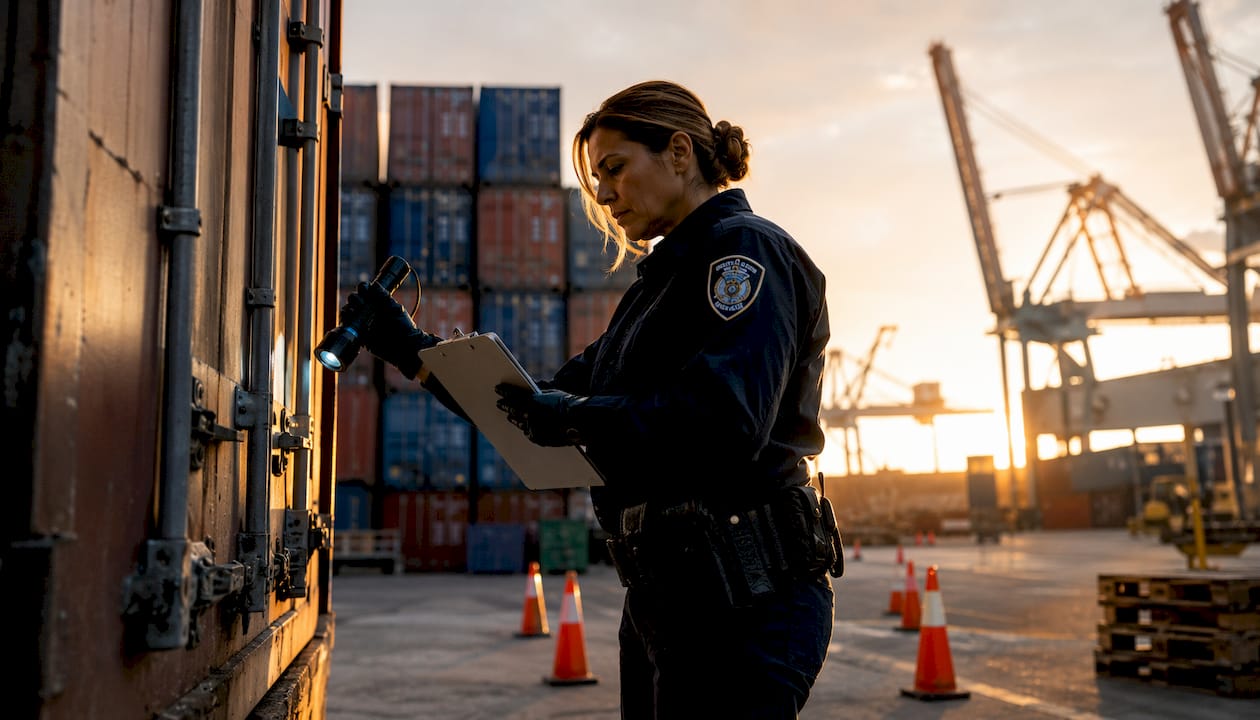
A tailgate exam, sometimes called a pier exam or “1H hold,” involves CBP officers physically opening the container doors at the terminal and visually inspecting the cargo inside. No offloading occurs unless something looks wrong. These exams typically take 2–5 days. The hold is triggered automatically by CBP’s risk-scoring system after reviewing ISF and AMS data, and it is far more routine than most importers assume.
Full offload exam at a Centralized Examination Station
The most intensive option. The container is trucked from the terminal to a CES facility, where it is fully unloaded, inspected piece by piece, possibly sampled for lab testing, and then reloaded. Steps include:
- CBP issues a hold and directs the container to a designated CES
- A drayage carrier transports the container from the terminal to the CES
- Warehouse staff at the CES unload all cargo
- CBP officers conduct a thorough physical inspection; samples may be collected
- If no violations are found, CBP releases the hold
- Warehouse staff reload the container
- The container returns to the terminal for pickup
Full offload exams average 5–7 days under normal conditions, though port congestion can push that well beyond a week. Fees typically run into the low thousands of dollars for the CES handling alone, before demurrage and detention charges stack on top.
Pro Tip: If you receive a “1H exam” notice, do not panic. It is a standard tailgate hold triggered by automated risk scoring. Confirm your ISF and AMS data are accurate, notify your broker immediately, and track the hold status daily to catch any escalation early.
How Centralized Examination Stations work in practice
A Centralized Examination Station is a CBP-authorized, privately operated facility located near a port where containers requiring intensive inspection are transported for full offload exams. The CES model exists because thorough inspections inside a busy terminal are logistically impractical. A secured, purpose-built facility with specialized equipment and trained warehouse staff produces faster, more thorough results than a pier-side teardown.
When CBP directs a container to CES, the sequence runs like this:
- The terminal releases the container to a drayage carrier under a CBP hold
- The carrier delivers the container to the designated CES facility
- The CES operator logs the container in, tests for toxic industrial chemicals if required, and begins the ventilation process if needed
- Warehouse staff unload the container under CBP supervision
- CBP conducts the physical examination, which may include document verification, cargo sampling, or photography
- Once CBP clears the hold, the CES operator reloads the container and notifies the importer or broker
- The container returns to the terminal for final carrier release
The importer bears the cost of transportation to and from the CES, plus the facility’s handling fees. Those fees are billed through the shipping line and passed to the importer. For a practical look at how inspection scheduling affects depot operations, the logistics workflow at the CES stage is where most of the delay and cost accumulate.
Common challenges at CES include facility congestion during peak import seasons, limited appointment windows for drayage carriers, and additional holds triggered by lab sample results. Any one of these can extend a 5-day exam into a 10-day or longer ordeal.
Documentation and compliance requirements after an exam
The paperwork timeline does not pause because your container is under examination. CBP’s filing deadlines run from vessel arrival and cargo release dates, not from when the exam concludes.
Key obligations:
- Cargo release application: must be filed within 15 calendar days of vessel arrival; missing this triggers automatic holds and demurrage
- CBP Form 7501 (Entry Summary): must be filed within 10 working days after cargo release from CBP custody
- Estimated duties: must be paid within 10 working days of cargo release
- Importer Security Filing (ISF): must be submitted at least 24 hours before vessel loading at the foreign port; late or inaccurate ISF filings are a primary exam trigger
Storage free time at most U.S. ports runs 3–7 days before demurrage charges begin. A CES exam that runs 7 days will almost certainly push you into demurrage territory.
| Filing | Deadline | Consequence of missing |
|---|---|---|
| Cargo release application | 15 calendar days from vessel arrival | Automatic hold, demurrage begins |
| CBP Form 7501 (Entry Summary) | 10 working days after cargo release | Liquidated damages, penalty risk |
| Estimated duties payment | 10 working days after cargo release | Interest charges, potential seizure |
| ISF filing | 24 hours before foreign port loading | Exam trigger, — |
Common compliance pitfalls include mismatched commodity descriptions between the ISF and the commercial invoice, incorrect HTS codes on the entry summary, and missing or incomplete packing lists. Each of these can escalate a routine scan to a full offload exam. Coordinating with your customs broker before the vessel departs, not after it arrives, is the only reliable way to catch these errors in time.
Customs release and carrier release are two separate events. Customs release confirms legal entry compliance; carrier release confirms that freight charges are paid and documentation is complete for physical pickup. A container can clear CBP and still sit at the terminal for days because of an unpaid freight invoice or a missing delivery order.
How CBP targets containers for examination
CBP’s targeting system is data-driven and operates before your vessel reaches port. The agency uses AMS and ISF filings to assign a risk score to every inbound shipment. High-risk scores trigger holds; low-risk shipments move through without examination. CBP manages security and facilitation at 328 ports across the United States, and the targeting system is what makes that scale possible.
Risk factors that elevate a shipment’s score include:
- Late or amended ISF filings
- Mismatches between ISF data and the bill of lading
- Shipments from high-risk origin countries or through flagged transshipment ports
- Importers with a history of violations or low compliance scores
- Unusual commodity-to-weight ratios or vague cargo descriptions
- First-time importers with no established trade history
CBP also draws on intelligence from the Container Security Initiative (CSI), under which CBP officers work at nearly 20 foreign ports to screen U.S.-bound cargo before it loads. A shipment that passes CSI screening at origin carries a lower risk profile on arrival.
Importers enrolled in the Customs Trade Partnership Against Terrorism (CTPAT) benefit from reduced exam frequency because their supply chain security practices have been pre-validated by CBP. CTPAT membership does not guarantee exam-free entry, but it shifts CBP’s focus toward higher-risk shipments and away from yours. For importers moving regular volume, the application process is worth the effort.
Understanding how pre-arrival shipment data transmitted through AMS and ISF affects targeting is the first step toward reducing your exam rate over time.
Practical tips for navigating the customs examination process
Most exam-related delays are preventable. The ones that are not, you can at least plan for.
Get your ISF data right the first time. Consistent, accurate data across your ISF, commercial invoice, packing list, and bill of lading is the single most effective way to keep your risk score low. Discrepancies between these documents are the most common trigger for escalated exams. Accurate AMS and ISF filings are the primary defense against a 1H hold.
Coordinate with your broker before the vessel loads. By the time the ship is at sea, your options for correcting filing errors are limited and expensive. A pre-shipment document review with your customs broker catches HTS code errors, valuation issues, and description mismatches before they become exam triggers.
Understand the distinction between customs release and carrier release. Carrier logistics issues account for the majority of post-clearance delays, not CBP holds. Confirm freight payment, delivery orders, and chassis availability before your container clears customs, not after.
Plan for demurrage from day one. Free time at most ports runs 3–7 days. If your container is selected for a CES exam, that clock keeps running. Pre-arrange drayage appointments and chassis availability so you can move the container the moment CBP releases it.
Apply for CTPAT if your import volume justifies it. The program requires a documented security plan and a CBP validation visit, but the payoff is a measurably lower exam rate and faster processing. For high-volume importers, it is one of the few levers that directly reduces inspection frequency.
Track holds actively, not passively. Check your container status in ACE (Automated Commercial Environment) daily during a hold. Escalations from a tailgate exam to a CES offload can happen quickly, and catching them early gives you time to arrange drayage and notify your consignee.
For a broader view of how customs affects transportation costs and storage fees, the financial exposure from a single CES exam can exceed the cost of the goods themselves for smaller shipments.
Pro Tip: Request the specific exam type and hold code from your broker the moment a hold is issued. The hold code tells you exactly what CBP is looking for, which lets you prepare the right documents and avoid a second exam.
How to handle discrepancies found during an examination
When CBP finds a discrepancy during an exam, the response depends on what was found and how serious it is. Minor issues, like a quantity variance between the packing list and the actual cargo, are usually resolved by submitting a corrected entry or a written explanation through your broker. More serious findings, such as misdeclared goods, prohibited items, or suspected fraud, trigger a formal enforcement action.
If CBP issues a Notice of Action (CBP Form 29), your broker has a defined window to respond, typically 20 days for a protest. Missing that window forfeits your right to contest the finding. For discrepancies involving valuation or classification, you can file a Post-Entry Amendment (PEA) or a Prior Disclosure if the error was unintentional and self-reported before CBP initiates a formal inquiry. Self-reporting consistently results in lower penalties than waiting for CBP to find the problem independently.
When goods are seized or detained, CBP issues a Notice of Seizure. At that point, you need a licensed customs attorney, not just a broker. The distinction matters because legal privilege applies to attorney communications but not to broker communications in enforcement proceedings.
Document everything during an exam. Request the examination report from your broker, keep records of all CES fees and drayage invoices, and photograph any cargo damage that occurs during the offload and reload process. Damage claims against the CES operator require documented evidence, and without it, recovery is unlikely.
Communication protocols during the examination process
Clear, fast communication between all parties is what keeps an exam from becoming a logistics crisis. The moment CBP issues a hold, a specific chain of notifications should activate.
Your customs broker is the primary point of contact with CBP. They receive hold notices through ACE and are responsible for relaying exam type, hold code, and required documents to you. Establish a protocol with your broker before your first shipment arrives: define response time expectations, designate a backup contact, and agree on how hold updates get communicated.
The terminal operator controls physical access to the container. If a CES exam is ordered, the terminal must release the container to the drayage carrier, and that release requires coordination between your broker, the carrier, and the terminal’s gate office. Delays in this handoff add days to an already extended timeline.
Your freight forwarder, if separate from your broker, needs to know about any hold immediately because they manage the carrier relationship and can begin arranging chassis and drayage appointments before CBP formally releases the hold. Waiting until release to start those conversations guarantees you will miss your free-time window.
For importers managing multiple shipments, a shared status dashboard or a container depot management system that integrates with terminal and customs data gives every stakeholder real-time visibility without requiring manual status calls. That kind of coordination becomes especially valuable when a CES exam overlaps with peak season port congestion.
Keep your consignee informed with realistic timelines, not optimistic ones. A CES exam that runs 7 days with a 3-day free-time window means demurrage is almost certain. Telling your consignee that upfront lets them adjust their receiving schedule and avoid a second round of logistics costs on their end.
Key Takeaways
The container customs examination port process is a risk-based, multi-stage system where accurate pre-arrival data filings are the most effective tool importers have to reduce exam frequency and cost.
| Point | Details |
|---|---|
| Three exam types, three timelines | NII scans take 2–3 days, tailgate exams 2–5 days, and CES offload exams 5–7 days or longer. |
| Filing deadlines are fixed | Cargo release must be filed within 15 calendar days of arrival; CBP Form 7501 within 10 working days of release. |
| CES exams carry real costs | Full offload fees run $1,000–$2,500 plus demurrage, which begins after 3–7 days of free time at most ports. |
| ISF accuracy is your best defense | Consistent data across ISF, AMS, and commercial documents is the primary way to lower your risk score and avoid holds. |
| CTPAT reduces exam frequency | CBP-validated CTPAT members receive fewer exams because their supply chain security is pre-approved. |