


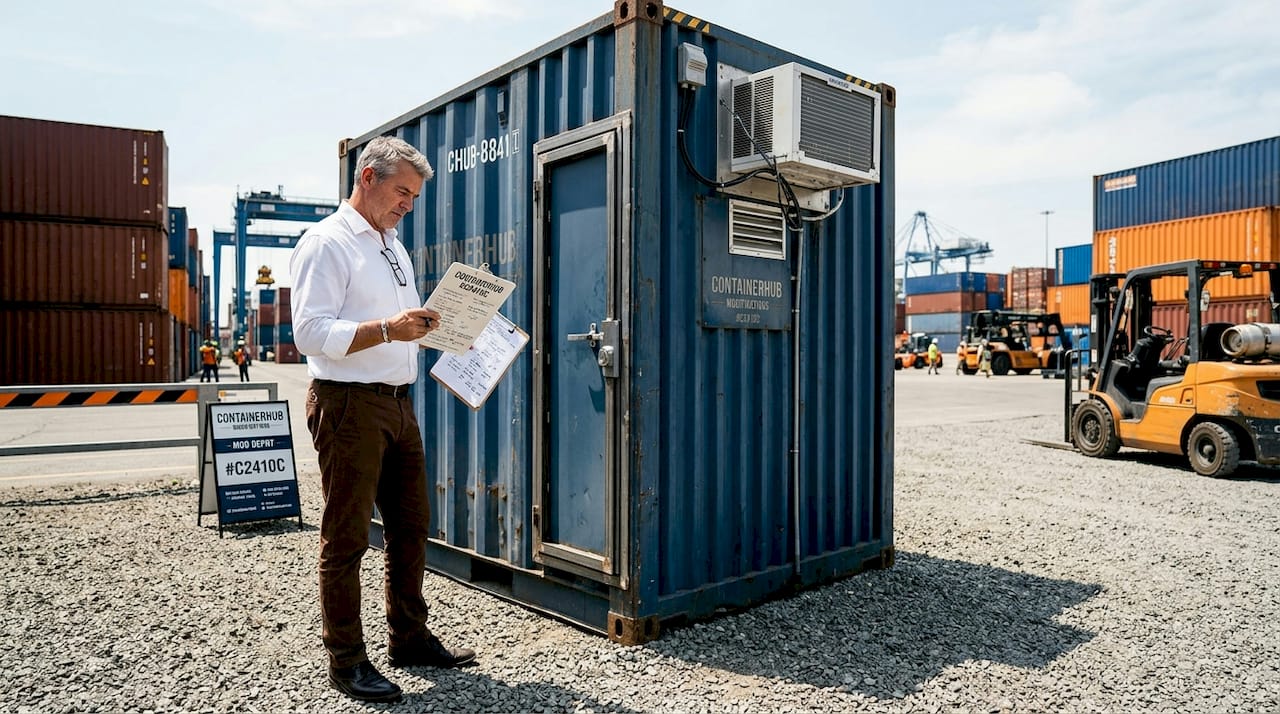
Container Modification for Storage: A Logistics Guide
Shipping containers are not just steel boxes that move cargo across oceans. For logistics professionals, understanding what is container modification for storage means recognizing that a standard ISO unit can become a climate-controlled warehouse, a secure tool room, or a modular staging area in days. Container modification, formally called container conversion, spans everything from a simple shelving install to a full structural transformation. The gap between those two extremes matters enormously for your budget, your permits, and whether your lease agreement survives intact.
Table of Contents
- Key takeaways
- What container modification for storage actually means
- Common modifications and how they improve logistics operations
- Reversible vs. permanent modifications: what you need to know
- Emerging trends in container-based storage solutions
- Practical steps for planning your container modification
- My take on container modification as a strategic tool
- How Containerhub supports your modified container operations
- FAQ
Key takeaways
| Point | Details |
|---|---|
| Modification tiers vary widely | Costs range from $200 for basic vents to $15,000+ for full HVAC and multi-door builds. |
| Reversible vs. permanent matters | Rental containers prohibit cutting and welding; non-structural accessories are generally allowed. |
| Permits depend on complexity | Electrical work and occupancy changes trigger mandatory inspections in most jurisdictions. |
| Modular systems expand capacity fast | Clamp-on canopy systems add covered staging space without foundations or welding. |
| Digital tools close the visibility gap | Asset management software tracks modified containers as distinct operational units in your fleet. |
What container modification for storage actually means
Container modification for storage is the practice of adding, altering, or integrating components into a standard ISO shipping container to make it function as a purpose-built storage asset rather than a transit vessel. The industry uses “container conversion” as the recognized technical term, though “modification” is common in procurement and operations discussions.
Standard ISO containers come in 20ft and 40ft lengths, with 40ft high-cube units being the preferred base for storage builds because the extra foot of interior height matters when you start adding shelving, lighting, and HVAC. Common modifications include man-doors, roll-up doors, lockboxes, ventilation panels, insulation, interior shelving systems, and electrical sub-panels.
The modification process falls into three tiers based on complexity and cost:
- Basic tier ($200 to $2,500): Passive vents, door gasket upgrades, interior shelving, and padlock boxes. No structural changes.
- Moderate tier ($2,500 to $8,000): Personnel doors, roll-up doors, basic electrical lighting circuits, and wall-mounted storage systems.
- Full conversion ($8,000 to $15,000): HVAC installation, multiple door cutouts, sub-panel electrical, and insulated wall and ceiling packages.
Structural integrity is the governing constraint throughout. Every cut, weld, or drilled penetration affects the load-bearing frame of a unit engineered to stack six containers high under ocean conditions. Any modification that compromises the top rails, corner castings, or floor beams needs engineering review before fabrication begins.
Pro Tip: Before ordering any modification, request the container’s CSC certification status. Modifications that alter structural members can void the certification, which matters if the unit will ever return to intermodal service.
Common modifications and how they improve logistics operations
The most requested modification in logistics environments is door reconfiguration. Standard cargo containers have swing doors on one end only, which creates workflow problems when you need lateral access in a tight yard. Adding personnel doors and roll-up doors to the side panels converts a container into an accessible tool room, PPE station, or parts staging area that workers can enter without moving the entire unit.
Ventilation and insulation work together to address what the industry calls “container rain,” the condensation that forms on interior steel surfaces when temperature differentials cause moisture in trapped air to precipitate. Replacing door gaskets with marine-grade EPDM material and adding passive roof vents addresses this directly. Gaskets run $400 to $700 installed. Neglecting them risks inventory damage that costs far more.
Electrical upgrades deserve particular attention for logistics applications:
- Sub-panel installation allows connection to site power for lighting, charging stations, and climate control equipment.
- LED lighting circuits make a container usable for inventory picking during night operations.
- Dedicated outlet clusters support tool charging, security cameras, and access control systems.
Climate-controlled storage builds go a step further, combining insulated wall and ceiling panels with a through-wall HVAC unit. These are the right solution for storing pharmaceuticals, electronics, or temperature-sensitive parts that cannot tolerate seasonal swings.
Pro Tip: For temperature-sensitive inventory, size your HVAC unit for the worst-case ambient temperature at your site, not the annual average. A unit adequate for spring will fail in a July peak.
The uses of modified containers extend well beyond simple storage. Mobile offices, security checkpoints, electrical distribution rooms, and first-aid stations are all viable builds on a standard ISO chassis.
Reversible vs. permanent modifications: what you need to know
This distinction is not academic. It directly affects whether you can legally modify a container, whether your rental agreement holds, and whether the unit retains resale value after you are done with it.
Rental agreements prohibit permanent modifications including cutting, welding, and drilling. The rationale is structural: permanent changes weaken the frame in ways that affect safe lifting and stacking. Non-structural accessories attached with clamps, adhesives, or removable fasteners are generally permitted under most rental contracts.
| Modification type | Structural impact | Permit required | Allowed on rentals | Resale impact |
|---|---|---|---|---|
| Passive vents, gaskets | None | No | Yes | Neutral to positive |
| Interior shelving (clamp-mounted) | None | No | Yes | Neutral |
| Personnel door (cut-in) | Moderate | Often yes | No | Moderate reduction |
| Roll-up door (cut-in) | Moderate | Often yes | No | Moderate reduction |
| Full HVAC and electrical | Significant | Yes | No | Context-dependent |
| Clamp-on canopy system | None | Usually no | Yes | Preserves value |
For owned containers, the permitting picture gets more specific. Electrical inspections are mandatory for any unit with wired electrical components in most jurisdictions. Occupancy changes, meaning converting a storage unit into a space where people work regularly, typically trigger building permit requirements. Municipal zoning must be verified before delivery to confirm the site allows container-based structures at all.
The practical implication for logistics operations: if your fleet includes a mix of owned and leased containers, your modification program needs two separate tracks. Leased units get reversible accessories only. Owned units can receive structural work but need engineering and permit coordination first.
Emerging trends in container-based storage solutions
The industry is moving toward modular, relocatable systems that deliver warehouse-like functionality without permanent construction commitments. Two trends stand out for logistics professionals in 2026.
The first is clamp-on canopy systems. These purpose-built covers attach to container top rails using engineered clamps, requiring no welding, drilling, or foundations. A covered staging area spanning multiple containers can be installed in days. Because the canopy frame uses the container ISO rails as the structural base, it requires no separate permits in most jurisdictions. Logistics operators use these systems to expand yard capacity during peak season and then relocate or remove them when demand normalizes.
| Solution type | Install time | Foundation needed | Permit required | Relocatable |
|---|---|---|---|---|
| Clamp-on canopy system | Days | No | Usually no | Yes |
| Permanent warehouse addition | Months | Yes | Yes | No |
| Temporary fabric structure | Days | Anchors only | Sometimes | Yes |
| Modified container (structural) | 1 to 3 weeks | No | Sometimes | Yes |
The second major trend is Battery Energy Storage Systems integrated into 20ft containers. Factory-integrated turnkey BESS units combine batteries, power conversion electronics, and climate control into a single ISO footprint, reducing on-site installation time by over 50% compared to traditional setups. For logistics sites running off-grid or managing peak power demand, this turns a storage container into an active infrastructure asset.
The broader market signal is clear. The U.S. modular structure market is valued at over $12 billion annually in 2026, driven by site managers prioritizing flexible, relocatable storage over capital-intensive permanent construction.
Practical steps for planning your container modification
Getting container modification right starts before you call a fabricator. These steps apply whether you are modifying a single unit or standardizing modifications across a fleet.
- Define the use case precisely. Tool room, climate-controlled parts storage, and personnel staging area each require different modifications. A vague brief produces a generic container.
- Audit your existing fleet for candidates. Containers in good structural condition with sound floors and intact corner castings are the best modification candidates. Units with prior damage repairs need engineering assessment first.
- Decide owned vs. leased early. If you are renting, your modification options are limited to reversible accessories. Clarify this before engaging a fabricator to avoid contractual problems.
- Verify site requirements. Check zoning, confirm electrical inspection protocols, and identify whether delivery access supports the container dimensions you plan to use.
- Choose modifications that preserve flexibility. Modular canopy systems and clamp-mounted shelving preserve resale value and allow redeployment. Structural cuts reduce future options.
- Plan for maintenance from day one. Gasket replacement is the single most common overlooked maintenance task. Budget for it annually before moisture infiltration creates an inventory loss event.
- Integrate modified units into your asset tracking system. A modified container with specific functional attributes needs to be tracked differently from a standard ISO unit in your container fleet management system.
Working with a fabricator who understands logistics-specific requirements matters more than working with the cheapest shop. A provider experienced in depot and yard environments will know to orient personnel doors away from prevailing weather, size shelving to standard pallet dimensions, and route electrical conduit to avoid conflict with forklift access paths.
My take on container modification as a strategic tool
I’ve worked with enough logistics operations to say this with confidence: most businesses treat container modification as a one-off expense rather than an asset management decision. That framing costs them money.
When you strategically modify containers to serve specific operational functions, you are turning a commodity steel box into a purpose-built resource that can be redeployed as your workflow changes. A container built as a secure tool room this year can become a parts staging area next year if you used reversible shelving and kept the structural frame intact. That flexibility has real dollar value in operations where seasonal demand swings are the norm.
What I’ve learned is that the businesses getting the most out of container modification are the ones treating it the same way they treat any capital equipment decision: with a use-case specification, a maintenance plan, and an exit strategy. The ones who struggle are the ones who order modifications off a price list without connecting them to operational requirements.
The regulatory side also gets underestimated. I’ve seen operations bring in electrically modified containers without running through the inspection checklist, then face delays and cost overruns when the local authority gets involved. Get that sorted before the container arrives on site, not after.
Container modification is not a workaround. It is a legitimate, cost-effective way to deploy flexible storage capacity in environments where permanent construction is too slow, too expensive, or simply not permitted.
— William Carley
How Containerhub supports your modified container operations
Managing modified containers as distinct operational assets requires more than a spreadsheet. Once a container carries specific functional attributes, such as electrical systems, climate control, or custom access configurations, it needs to be tracked, inspected, and maintained differently from standard ISO units in your fleet.
Containerhub’s depot management software gives depot operators and logistics teams the digital infrastructure to manage modified containers at scale. The platform tracks gate-in and gate-out activity, logs inspection and repair workflows, and provides customer-facing visibility through a self-service portal. For teams managing a mix of standard and modified units, Containerhub’s container yard software delivers the asset-level granularity needed to track what each unit is configured for and where it sits in the operational cycle. Explore Containerhub’s platform to bring structure and visibility to your container asset operations.
FAQ
What is container modification for storage?
Container modification for storage, also called container conversion, is the process of adding components such as doors, ventilation, shelving, insulation, and electrical systems to a standard ISO shipping container to make it function as a purpose-built storage asset rather than a transit unit.
What can be stored in modified containers?
Modified containers can store tools, parts, pharmaceuticals, electronics, and general inventory, depending on the modifications applied. Climate-controlled builds with insulation and HVAC extend suitability to temperature-sensitive goods.
Can you modify a rented storage container?
Rental agreements typically prohibit permanent modifications like cutting and welding. Non-structural, reversible accessories such as clamp-mounted shelving and passive vents are generally allowed without violating the contract.
Do modified containers require permits?
Basic storage modifications like vents and shelving require no permits. Electrical work triggers mandatory inspections in most jurisdictions, and structural changes or occupancy modifications typically require building permits and zoning verification before the unit is deployed.
How much does container modification cost?
Modification costs range from $200 to $2,500 for basic builds, $2,500 to $8,000 for moderate upgrades with doors and lighting, and $8,000 to $15,000 for full packages including HVAC and electrical sub-panels.