

Logistics Company Depot Interaction Explained for Pros
Most logistics professionals know depots as physical holding yards. What gets overlooked is that logistics company depot interaction explained properly is far more than trucks arriving and containers moving. It is a tightly coupled exchange of information, authorization, and physical coordination that, when misaligned, creates cascading delays across the entire supply chain. This guide breaks down the mechanics of depot interactions from gate protocols to compliance requirements, examines how technology is reshaping the process, and gives you concrete strategies to reduce dwell time and improve throughput at your operations.
Table of Contents
- Key takeaways
- Logistics company depot interaction explained: the core workflows
- Technology transforming depot interactions
- Security, compliance, and documentation requirements
- Best practices for optimizing depot interactions
- My take on where depot operations are actually heading
- See how Containerhub brings this all together
- FAQ
Key takeaways
| Point | Details |
|---|---|
| Depot interaction is information-driven | Physical container moves fail without accurate, timely documentation and real-time data exchange between parties. |
| Gate operations are custody transfer points | Every gate check-in or check-out legally transfers container responsibility, making document verification non-negotiable. |
| Technology replaces radio and whiteboard | RFID, EDI, and yard management systems replace manual coordination with event-driven, traceable workflows. |
| Compliance shapes every touchpoint | ISPS Code requirements and customs movement permissions directly control what can move, when, and how. |
| Pre-arrival processing is the biggest lever | Compressing the gap between physical container availability and cargo release authorization reduces costly dwell time faster than any physical upgrade. |
Logistics company depot interaction explained: the core workflows
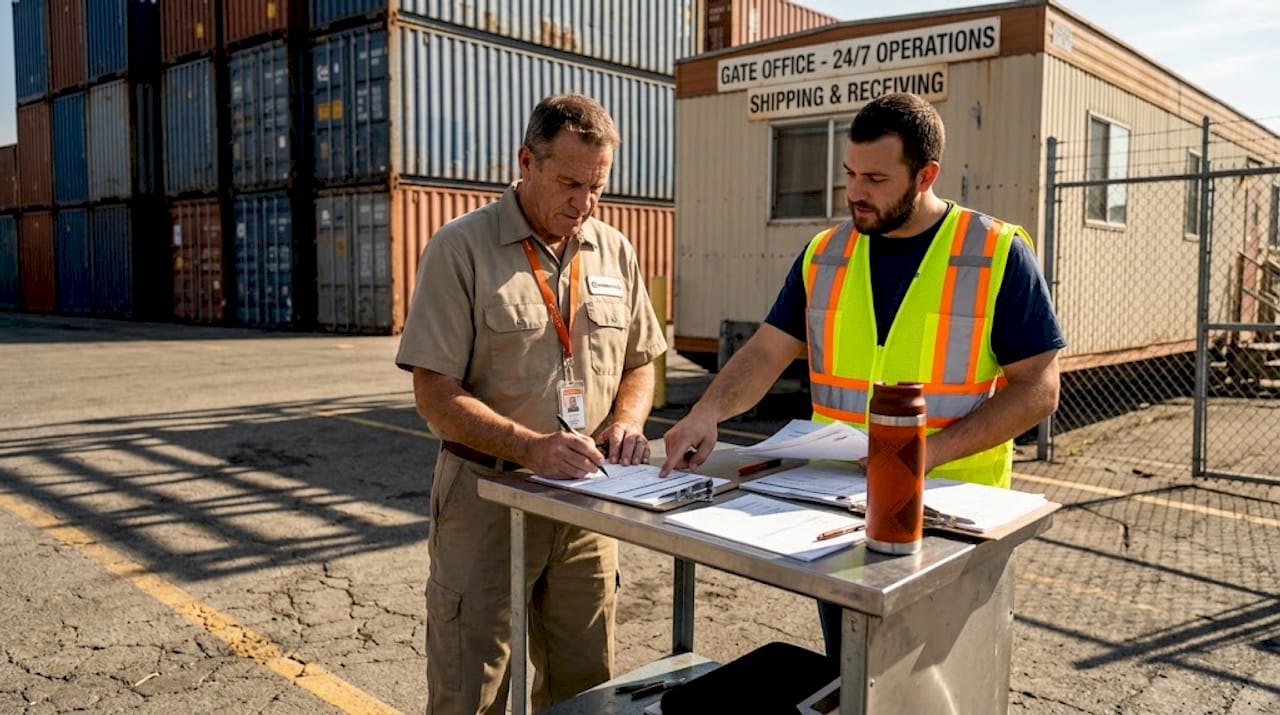
The depot gate is not just an entry point. It is where legal custody transfers from the carrier to the depot operator, making every action at the gate a documented, verifiable event. A missed seal check or unverified Delivery Order does not just cause a paperwork headache. It generates yard congestion, holds up driver rotations, and introduces liability disputes that take days to resolve.
How gate operations actually work
For import containers, the driver must present a valid Delivery Order before the depot releases the unit for onward movement. The gate team matches container details and weight against the manifest, checks the seal number, and photographs any visible damage. Only after every field clears does the container get a yard slot assignment.
Export gate-ins follow the reverse logic. The depot captures container identity, tare weight, and departure details before the unit enters the yard. Any discrepancy between the booking data and the physical container triggers a hold. That hold, if not resolved quickly, ripples back to vessel scheduling.
Pro Tip: Pre-register container and driver details before arrival using an appointment system. Depots that confirm documentation before the truck arrives reduce gate processing time by more than half compared to walk-in operations.
Yard management: more than parking spaces
Once a container clears the gate, yard management takes over. Yard management systems coordinate trucks, trailers, gates, parking zones, dock assignments, and drivers to answer three operational questions: Who is on site? Where should they go? What happens next?
Staging lanes separate inbound from outbound units to prevent cross-traffic. Dock assignments are matched against container type and priority. Trailer parking allocates space dynamically based on expected dwell time rather than first-available logic. Without a system enforcing these rules, yards default to tribal knowledge and radio chatter, both of which fail under volume pressure.
Common friction points in yard management include:
- Unplanned arrivals that displace pre-staged export containers
- Paper-based dock boards that go stale within minutes of the first exception
- Unclear handoff protocols between security, yard staff, and customer representatives
- Inefficient space usage from containers held past their release window
Understanding logistics depots at this level means recognizing that the physical layout is a constraint, but the workflow design is the real variable you can change.
Technology transforming depot interactions
The shift from manual to event-driven depot operations is the single most significant development in understanding how logistics companies operate at the depot level. Real-time visibility, guided loading sequences, dynamic dock assignments, and exception routing all depend on the same underlying infrastructure: systems that react to events rather than waiting for humans to report them.
Yard management systems
Modern yard management software integrates gate access control, carrier appointment scheduling, dock handling, and real-time container location into one operating picture. When a truck checks in at the gate, the system automatically assigns a dock, updates the yard map, and notifies the relevant team. No radio call required. No whiteboard update. The event propagates through the system.
A comparison of manual versus system-driven depot coordination shows just how significant the operational gap is:
| Capability | Manual coordination | System-driven coordination |
|---|---|---|
| Container location accuracy | Spot checks and memory | Real-time RFID or RF tracking |
| Dock assignment | Radio and whiteboard | Automated based on priority rules |
| Appointment scheduling | Phone and spreadsheet | Digital portal with real-time slots |
| Exception handling | Supervisor judgment | Rule-based escalation with audit trail |
| Customer visibility | Phone inquiry | Self-service portal with live status |
| FIFO compliance | Estimated | Enforced by system logic |
RFID, EDI, and real-time tracking
RFID and EDI enable real-time acceptance and release of containers, allowing depot operations to treat every arrival as a query against a live inventory state. When a container enters the yard, its RFID tag updates the system automatically. When a shipping line sends an EDI release message, the depot system matches it instantly against the physical inventory, confirming availability without a single manual lookup.
One depot operating RF plus EDI infrastructure with 24/7 electronic customer access reported measurable reductions in haulier waiting times and significantly improved container location accuracy. The business case is straightforward: less time waiting means lower demurrage costs, higher driver utilization, and better relationships with shipping lines.
Pro Tip: When evaluating depot software, check whether the EDI integration supports standard message types used by your shipping line partners. A system that requires custom mapping for every new carrier connection creates more maintenance overhead than it saves in operational effort.
The role of depots in logistics company collaboration cannot be overstated when technology is involved. GPS tracking and smart fleet tools on the carrier side need to communicate with depot yard systems on the operator side, creating a real data handshake between two historically siloed organizations.
Security, compliance, and documentation requirements
Compliance is not bureaucracy layered on top of operations. It defines the outer boundary of what depot interactions are allowed to look like.
ISPS Code and depot access protocols
The ISPS Code requires port facilities to implement documented security measures that prevent unauthorized access and control cargo handling. This means every depot operating within or adjacent to a port environment must have an approved security plan, a designated security officer, and access screening protocols that create an auditable record.
What this looks like in practice:
- Badge-based or biometric access control at all yard entry points
- Driver identity verification matched against booking references before gate entry
- Cargo screening procedures triggered by risk classification
- Regular security audits against the approved plan with documented outcomes
- Escalation procedures when access credentials cannot be verified
Structured compliance tied to the ISPS Code is not optional. The audit trail requirement means informal procedures, even if they work operationally, create regulatory exposure every time an inspection occurs.
Documentation requirements and throughput impact
The documentation chain in depot interactions follows a strict sequence. Delivery Orders must be valid and matched before release. Container weights must be verified. Seal numbers must be recorded with photographic evidence. Any break in this chain at the gate level causes a downstream hold that is far more expensive to resolve than the time it would have taken to complete the check correctly on arrival.
Movement numbers and bonded customs frameworks are mandatory before inland container transfers in regulated transshipment flows. When these permissions are delayed or missing, the depot cannot schedule the outbound move regardless of physical container availability. This is the documentation bottleneck that operations teams often misidentify as a yard problem.
Missing or delayed approvals in regulated container flows do not just affect one container. They affect dock scheduling, driver rosters, and customer commitments for the entire day’s operations. Every hour a container sits waiting for a movement number is an hour your yard capacity is occupied unproductively.
Best practices for optimizing depot interactions
The greatest efficiency gains in depot operations come from improving information and appointment flow, not from expanding the physical yard. Here is how logistics professionals can apply that principle operationally:
-
Implement pre-arrival processing. Require carriers to submit container details, driver identity, and documentation references at least two hours before arrival. Gate checks become confirmations rather than discoveries, cutting average gate processing time dramatically.
-
Adopt appointment-based scheduling. Unplanned arrivals are the primary cause of yard congestion. A digital appointment system with real-time slot availability gives carriers visibility and gives the depot control over arrival spacing.
-
Use system-driven sort plans. Guided loading sequences and automated dock assignments based on container priority, size, and destination eliminate the discretionary decisions that slow operations under pressure.
-
Replace whiteboards and radio with a shared digital operating picture. Every team touching the container, including gate security, yard staff, and the customer service desk, needs the same real-time view. Fragmented information creates the handoff failures that cause most operational disputes.
-
Build exception routing into the workflow. When documentation is missing or a container does not match its booking, the system should route it to a designated exception lane automatically. Exceptions handled at the gate are far cheaper than exceptions discovered after the container is in the yard.
-
Measure dwell time by root cause, not by average. An average dwell time metric hides the 20% of containers that account for 80% of the cost. Segment dwell by delay category: documentation holds, inspection holds, customs holds, and scheduling gaps. Then fix the largest category first.
The role of depots in logistics company performance is most visible in these operational margins. A depot that runs appointment-based arrivals, real-time tracking, and pre-cleared documentation consistently outperforms one with more physical capacity but weaker information processes.
My take on where depot operations are actually heading
I have spent considerable time working with logistics operations teams, and the pattern I keep encountering is this: organizations spend months evaluating new yard equipment or debating expansion plans, while the actual bottleneck sits in an email chain waiting for a Delivery Order approval.
Information latency is the real enemy. In my experience, the depots that run at the highest throughput per square meter are not the largest ones. They are the ones where every incoming container has been pre-cleared, pre-assigned, and pre-scheduled before the truck arrives at the gate. Physical infrastructure matters, but it is a multiplier on your information quality, not a substitute for it.
What I find genuinely underappreciated is the cultural change required to make technology adoption stick. Implementing a yard management system or EDI integration is the easy part. Getting gate security, yard operators, and the customer service team to trust the system over their own radio calls and personal judgment is where most projects fail. The technology has outpaced the operational culture in most depots I have seen.
The trajectory is clear: autonomous, event-driven depot management where every container movement is triggered by a system event rather than a human decision. We are not there yet for most operators. But the gap between current practice and that model is now primarily organizational, not technical.
— Deevly
See how Containerhub brings this all together
If the operational gaps described in this article look familiar, Containerhub was built specifically to close them. The platform digitizes every phase of depot interaction: gate-in and gate-out processing, yard management, damage inspection, repair workflows, billing, and EDI integration with shipping line systems. Instead of paper-based gate checks and radio-based coordination, your team works from a single real-time operating picture backed by an AI copilot that flags exceptions and suggests next steps automatically.
Containerhub’s client portal gives shipping lines and customers self-service visibility into container status without a single phone call to your operations team. For depot operators and logistics decision-makers ready to move beyond manual processes, the container depot management platform is designed to deliver measurable throughput improvements from day one. You can also explore the dedicated container depot software page to see the specific modules covering RFID, EDI, and gate automation in detail.
FAQ
What is logistics company depot interaction?
Logistics company depot interaction refers to the coordinated exchange of physical containers, documentation, and real-time data between carriers, depot operators, and shipping lines at container depots. It includes gate check-in/check-out, yard management, compliance checks, and information handoffs that govern container custody and movement.
Why does documentation matter so much at the depot gate?
The depot gate is a legal custody transfer point where container documentation and seal integrity must match before a container changes hands. Errors or missing documents at this stage cause yard congestion, dwell cost increases, and potential regulatory violations that take far longer to resolve than the original check would have required.
How do RFID and EDI improve depot operations?
RFID tags enable real-time container location tracking without manual scanning, while EDI messages automate release authorizations and status updates between shipping lines and depot systems. Together, they reduce haulier waiting times, enforce FIFO compliance, and give customers live visibility into their container status.
What does the ISPS Code require from depot operators?
The ISPS Code requires port facilities to maintain a documented security plan, a designated security officer, and access control procedures that create an auditable record of everyone entering the facility. Depots operating within port zones must meet these standards to remain compliant and avoid operational shutdown during security audits.
What is the fastest way to reduce depot dwell time?
Pre-arrival processing is the highest-impact intervention available. Requiring carriers to submit documentation and container details before arrival transforms gate checks from discovery events into confirmations, compressing the gap between physical container availability and cargo release authorization.