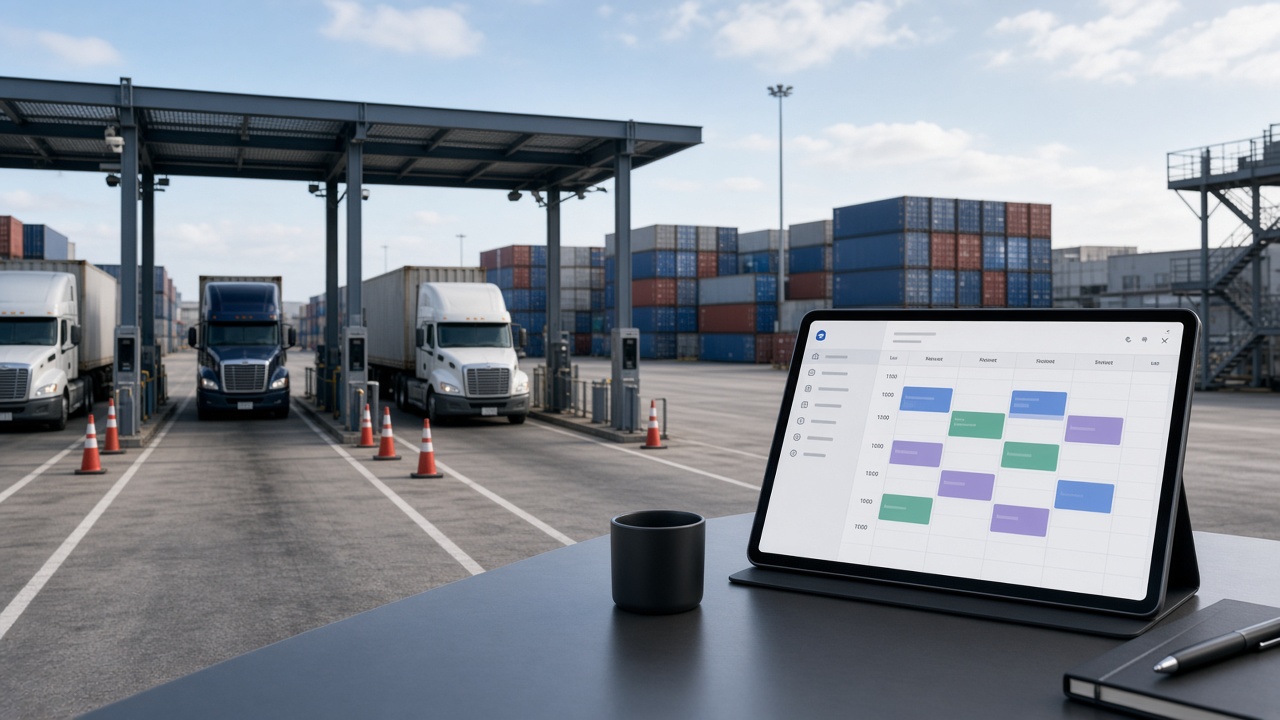



Thursday, 14:20. A line asks why unit ABCD1234567 is blocked for pickup. The desk opens the yard sheet: Available. The hold log lives in a chat thread from Tuesday. Grade is a sticky note on the EIR. FIFO order is “whoever the stacker reaches first.” Three minutes later the truck is at the booth and nobody can say who is allowed to clear the block.
That is the empty container hold and release problem at a US empty depot. Not “what does Available mean” (the availability spoke already owns that definition). Not gate queues or EIR capture. A release-authority problem: holds, grade, FIFO reservation, and who can clear a block must sit on one unit timeline—so the desk answers the line without a file hunt.
This piece is for ops-desk buyers who demo for line trust and release control on an empty-container depot/yard OS (~200–5,000 TEU)—gate, EIR, inspections, M&R, yard, billing, portal—not a freight TMS and not a marine TOS. For Available as a definition, see container availability management. For cross-yard release authority when a second fence exists, see multi-depot container management software. Here the focus stays on hold, clear, and release on one unit.
Hold vs Available vs Released — three states the desk confuses under pressure
Under a peak-week call, those three words get used as synonyms. They are not.
- Hold — an active block on releasability (damage, commercial, programme, customs, wait-for-line). The unit may still be on site.
- Available — release-ready under your rules: no blocking hold, grade eligible, no open M&R that blocks leave, not reserved elsewhere. Presence alone is not Available.
- Released — authority has cleared the unit for a named requester / booking / programme, so Gate Out can proceed without inventing a second approval in chat.
Practical rule: if the desk can flip a unit to Available by typing while a hold is still open, you do not have hold/release control—you have status theatre.
Who can place a hold (and who can clear it)
Release trust fails when every clerk can invent a hold—and nobody owns the clear.
Who typically places a hold: gate / inspection after damage or incomplete outcome; M&R when an estimate or work order opens (block only—not a repair-workflow rewrite); commercial / billing; programme or line instruction.
Who should clear it: a named role for that hold type—not “whoever answers the phone”—writing who, when, and why on the same unit timeline Gate Out will see. Dual control for commercial or customs holds when clients require it.
Practical rule: a hold without an owner and a clear path is a rumour the next shift cannot defend. Cross-yard release authority belongs with multi-depot container management software; on one site, end anonymous chat holds first.
Grade and FIFO: why the “next empty” is not always the closest bay
Lines do not buy “the nearest 40HC.” They buy a grade that matches the booking, and often a FIFO / programme order that protects pool fairness.
What breaks when bay proximity wins: cargo-worthy bookings pull repair-grade units from the top of the stack; older empties rot while newer returns leave first; Programme A reservations get skipped because Programme B’s truck was louder at the booth.
Grade is a release gate, not EIR decoration. FIFO (or your programme’s reservation order) stops “closest bay” from becoming commercial policy. Closest bay is a yard preference after grade and reservation clear—not a substitute.
Practical rule: the next empty is the next eligible empty—grade + reservation + hold clear—not the nearest TEU the radio can see.
Soft check: pick one unit a line called blocked last week. If hold reason, grade, FIFO/reservation, and who can clear live in three places, you do not have empty container hold and release yet—you have archaeology. See one unit timeline on containerhub.ai.
Line trust: answering “why is it blocked?” without a file hunt
Lines ask a concrete question. From one screen the desk must show: Hold vs Available vs Released (and to whom); hold reason; grade vs booking; who can clear and whether clearance is pending; when Gate In / inspection / last hold event wrote—so the answer cites events, not memory.
File-hunt answers (“check the chat / night sheet / EIR folder”) burn trust even when the eventual answer is correct. Line trust is time-to-truth on the unit timeline. Availability owns what Available must mean; this spoke owns why a unit is blocked and who can release it—link, do not rewrite: container availability management.
How gate events and open M&R should update hold state automatically
Holds that only live in human memory drift the moment the truck hits the booth. Minimum automatic updates on the unit timeline:
- Gate In + inspection → initial grade and any damage / incomplete hold
- Open M&R blocking leave → releasability block until the commercial rule says otherwise
- M&R close / grade change → hold clear or grade-eligible flip Available and release both see
- Release / reservation → named booking so Gate Out does not invent a second approval
- Gate Out → clears Released/Available so the next ask does not see a ghost
Gate queues and EIR capture belong with gate management software for depots. Hold/release owns whether those events change releasability on the same timeline. Product spine: empty container depot software.
Reject: a status column edited after radio; a chat pin titled HOLD; two systems where workshop knows the box is open and the release list does not.
Buyer checklist: release rules that survive peak week
Walk this with ops and the line-facing desk before peak:
| Check | Pass looks like |
|---|---|
| Three states named | Hold, Available, and Released are distinct on the unit—not synonyms in a sheet |
| Hold ownership | Every active hold shows type, placer, and who can clear |
| Clear authority | Named roles clear named hold types; no anonymous chat clears |
| Grade on release | Booking grade required; closest bay never overrides grade |
| FIFO / reservation order | Next eligible empty follows programme rules the stacker can see |
| Line “why blocked?” | Desk answers from one timeline—no EIR folder hunt |
| Gate + open M&R auto-update | Gate In, open repair, and Gate Out change releasability without a second sheet |
| No peak-week side log | Thursday 14:20 does not invent a sticky-note religion to survive |
Nice-to-haves: dual control on commercial holds; portal-visible block reasons scoped by client; alerts when a Released unit sits past appointment without Gate Out.
ContainerHub’s framing: holds, grade, FIFO/reservation, and release authority on the unit timeline the gate and desk already use—line trust as a consequence of shared events, not a faster spreadsheet search.
Soft CTA: hold/release on one unit timeline → containerhub.ai
If the line still waits while chat, sticky notes, and the yard sheet argue about one container number, the fix is not another hold log. It is empty container hold and release on one unit timeline—grade, FIFO, and clear authority included.
ContainerHub is a depot / yard OS for empty-container operations (~200–5,000 TEU)—gate, digital EIR, inspections, M&R, yard, billing, client portal, and Jarvis on one model—not freight TMS, not WMS, not a marine TOS pitch. Soft next step only: review the product, book a demo, or compare pricing. No directory “claim your depot” ask.
Walk one blocked unit in a demo. Ask whether hold reason, grade, reservation order, and who can clear stay on the same timeline Gate Out will use.
Visit ContainerHub · Pricing · Demo
Related reading: Empty container depot software · Container availability management · Multi-depot container management software · Gate management software for depots