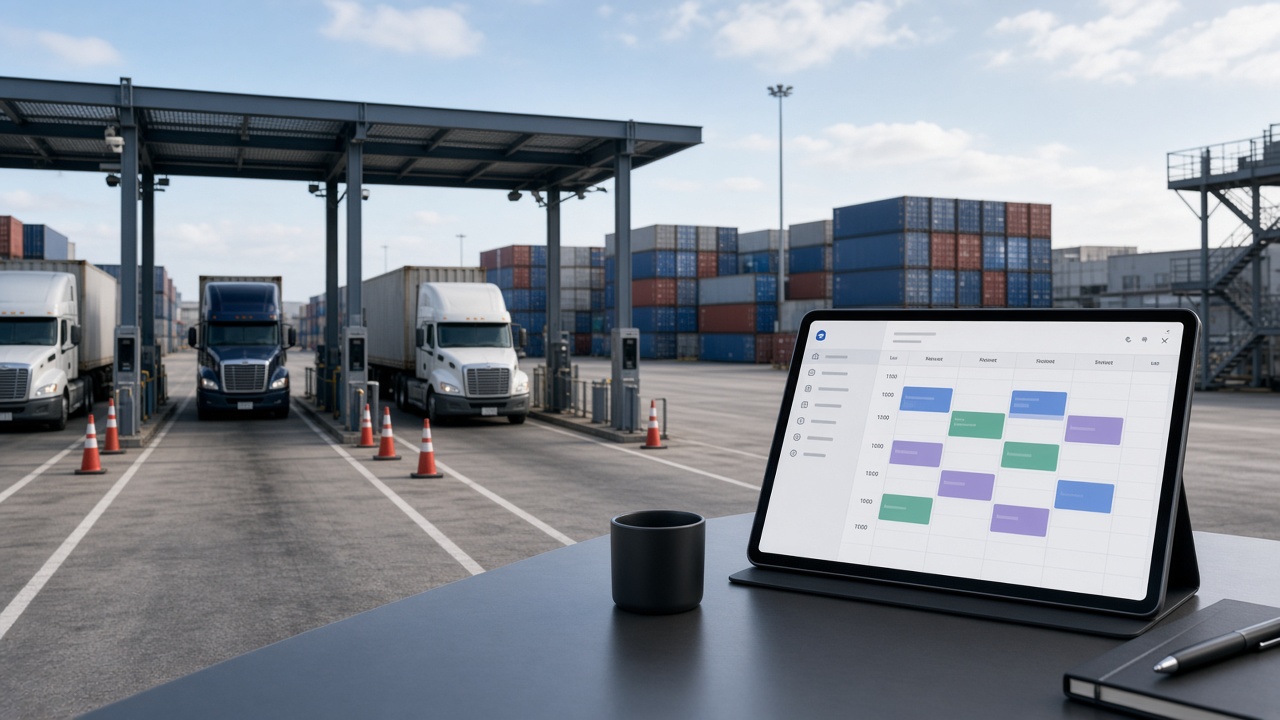


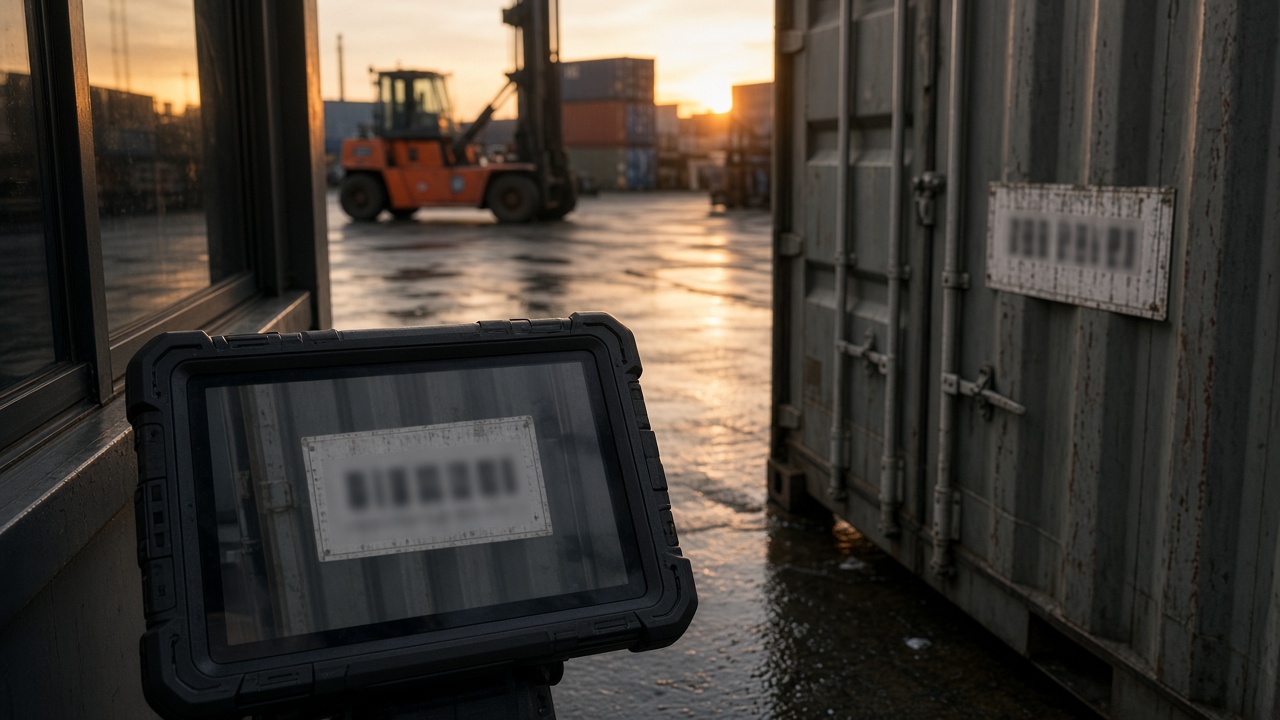
Monday, 06:48. The truck is on the scale. The clerk keys ABCD1234567 from a faded CSC plate, hits Gate In, and waves the driver through. Forty minutes later inventory shows a unit that never arrived, the line’s CODECO names a different box, and billing starts a storage clock on the wrong number. Nobody mistyped on purpose. The booth just typed under pressure.
That is the OCR container number capture depot gate problem at a US empty depot. Not a prettier camera gallery. Not marine-terminal OCR on a TOS. A capture-accuracy problem: the number that leaves the booth must land on the EIR and unit timeline yard, EDI, and billing will trust—so one fat-finger does not poison three systems.
This piece is for ops-desk buyers who demo for fewer re-keys on an empty-container depot/yard OS (~200–5,000 TEU)—gate, EIR, inspections, M&R, yard, billing, portal, Jarvis—not a freight TMS and not a marine TOS. Gate queues: gate management software for depots. Appointments: vehicle booking system for container depots. Focus stays on OCR into EIR and the unit timeline at Gate In—how to reduce manual data entry at container gates without a second capture app.
What a mistyped container number costs after Gate In
A wrong ISO number at the booth is not a typo. It is a forked truth.
What usually breaks next:
- Yard inventory shows a ghost unit and a real unit with no home
- Line EDI (CODECO / gate-event messages) names a box the yard never held
- Storage, handling, and dwell clocks start on the wrong ID—dispute packs argue about a unit that was never on site
- M&R and holds attach to the mistype; the real unit sits ungraded
- The next shift “fixes” it with a side sheet—and invents a second religion
Busy gates mistype. The cost hits inventory, EDI, and billing hours later—truck gone, evidence already dirty.
Practical rule: if correcting a Gate In number requires three systems and a chat thread, capture never owned the unit—typing did.
Where capture should land: EIR, unit timeline, and inventory — not a side photo folder
OCR that dumps a JPEG into a shared drive is a souvenir, not a system of record. Capture earns its keep when the read pre-fills the objects the desk already uses:
- Digital EIR — container number, move direction, and gate timestamp on the interchange the line will see
- Unit timeline — Gate In as an event on that ISO, not a row re-keyed into inventory later
- Yard inventory — presence and bay intent from the same ID the booth confirmed (container yard inventory management)
Photos can attach as proof. They must not be the only place the number lives. Side folders force the next clerk to re-type what the camera already saw—how Monday 06:48 becomes a month-end dispute.
Practical rule: OCR is a pre-fill into EIR and the unit timeline; a photo gallery without those writes is still manual entry with extra steps.
OCR confidence vs desk override: when the operator must confirm
Auto-accept every read and you invent clean-looking ghosts. Force a keystroke on every plate and you recreate the mistype OCR was hired to kill.
A practical booth pattern:
- High confidence — number + check digit pass; plate readable; no conflicting booking → one-tap accept, still logged
- Medium confidence — glare, mud, partial plate, or weak check → operator confirms or corrects before Gate In commits
- Conflict — OCR disagrees with appointment / pre-advice / expected unit → exception queue, not silent overwrite
Override is not failure. Unlogged override is. Every correction should write who changed what, when, and from which suggested read—so EDI and billing defend the event, not a rumour.
Practical rule: OCR proposes; the booth confirms on exception; the timeline records both the suggestion and the commit.
How clean capture feeds CODECO / billing clocks without re-keying
Once the confirmed number sits on the EIR and unit timeline, downstream work should consume that event—not rebuild it.
- CODECO / gate EDI — Gate In / Out messages cite the same ISO and timestamp the booth committed. Re-keying for EDI is how lines get a different truth than the fence. See CODECO EDI for empty container depots.
- Billing clocks — storage, handling, and dwell start from the committed Gate In ID and time—not a night-shift sheet that “fixed” a mistype. See empty container depot billing software.
- Inventory and holds — presence, grade, and Gate In holds attach to the confirmed unit so M&R and release do not chase a ghost
Practical rule: if EDI or billing needs a second typing of the container number, capture never closed—someone is still running a parallel ledger.
Soft check: pull one Gate In from last peak morning. If EIR number, inventory ID, CODECO payload, and billing clock disagree—or a clerk re-typed the plate after the truck left—you do not have OCR container number capture at the depot gate yet. You have photography plus archaeology. See gate capture on one timeline at containerhub.ai.
How OCR pairs with appointments (VBS) without becoming a second system
Appointments tell the desk who is coming. OCR tells the booth which unit actually arrived. Partners, not rivals.
Healthy pairing:
- VBS / pre-advice shows expected unit (or size/type/grade ask) before the truck hits the booth
- OCR reads the plate and matches or flags against that booking
- Match → Gate In commits on the shared timeline
- Mismatch → exception queue (wrong box, dual-move second leg, walk-up)—not a second app “just for OCR”
A standalone capture tool that cannot see the appointment creates a third truth: booking says X, camera says Y, inventory says whatever someone typed. Keep OCR in the same depot OS as vehicle booking system for container depots and the gate product—one booth, one commit.
Practical rule: OCR validates the unit against the slot; it should not invent a parallel booking religion.
Depot gate OCR vs marine terminal camera systems — keep the empty-depot frame
Marine terminals buy camera stacks tied to TOS moves, lane OCR, and ship-side events. Empty depots buy booth accuracy into EIR and yard truth.
Keep the empty-depot frame:
- Scale: ~200–5,000 TEU depot/yard OS, not a marine TOS camera corridor
- Outcome: confirmed ISO on EIR, unit timeline, inventory, CODECO, and billing—not a standalone inspection-app gallery
- Operators: gate clerk + tablet / booth camera with confidence and override—not port VBS / TOS theatre
- Product spine: empty-container depot software—not freight TMS, not “YMS for any warehouse”
If a vendor pitch starts with quay cranes and ends with a photo folder, it is the wrong SERP for this buyer. This spoke owns capture accuracy at the empty-depot booth.
Soft CTA: gate capture + yard truth on containerhub.ai / demo or pricing
If Gate In still depends on a clerk typing a faded plate while the truck blocks the lane, the fix is not a louder radio. It is OCR container number capture at the depot gate that pre-fills EIR and the unit timeline—confidence, override, and downstream EDI/billing included.
ContainerHub is a depot / yard OS for empty-container operations (~200–5,000 TEU)—gate, digital EIR, inspections, M&R, yard, billing, client portal, and Jarvis on one model—not freight TMS, not WMS, not a marine TOS pitch. Soft next step only: review the product, book a demo, or compare pricing. No directory ask.
Walk one Gate In in a demo. Ask whether OCR suggestion, booth confirm, EIR, and CODECO/billing clocks share one container number—without a re-key after the truck leaves.
Visit ContainerHub · Pricing · Demo
Related: Gate management software for depots · CODECO EDI for empty container depots · Vehicle booking system for container depots · Container yard inventory management · Empty container depot billing software