


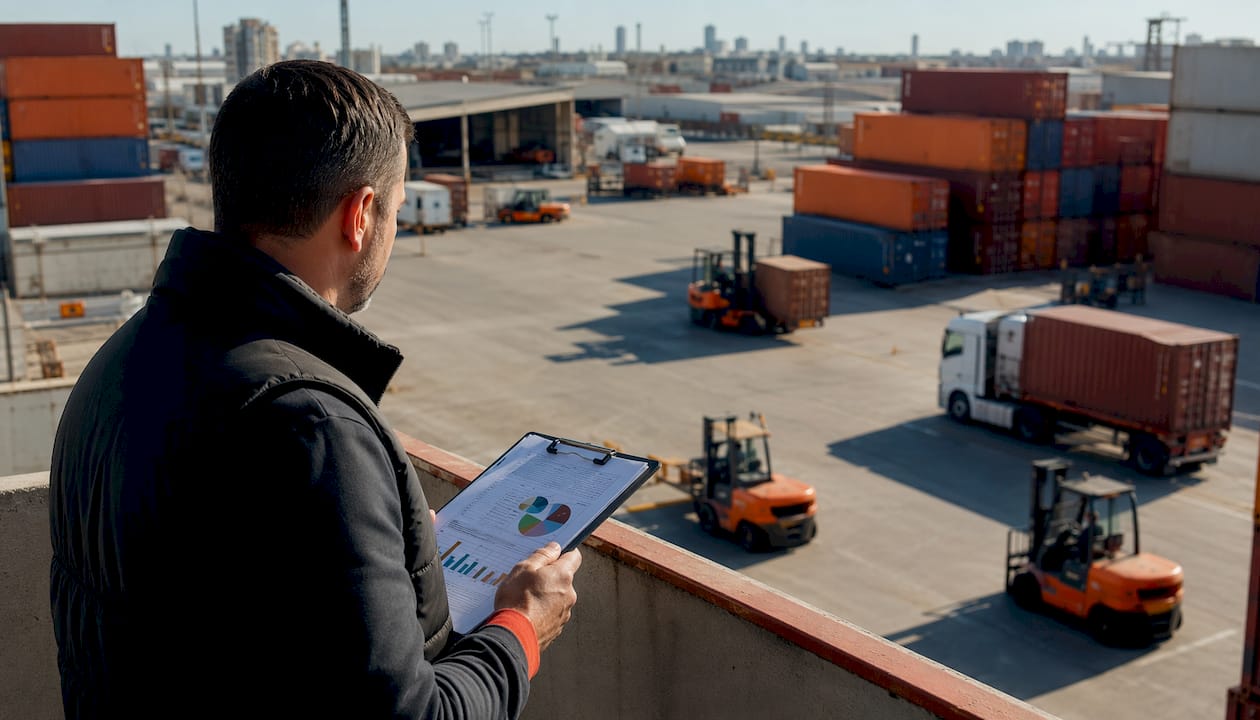
Common Depot Yard Inefficiencies: Examples for Managers
Depot yard inefficiency is defined as any operational bottleneck or process gap that slows container movement, inflates labor costs, or reduces asset productivity in a container yard. The common depot yard inefficiencies examples covered here span manual gate processes, poor visibility, suboptimal routing, bad stacking practices, and fragmented communication. Each one compounds the others. According to the 2026 State of Dock and Yard Management Report, approximately 90% of yards operate without dedicated management systems or standardized frameworks. That figure explains why so many depots remain reactive rather than controlled.
1. Common depot yard inefficiencies examples: manual processes
Manual processes are the single most widespread source of yard inefficiency. Gate check-ins done on paper, handwritten damage notes, and verbal task assignments all introduce delays and transcription errors that compound across every shift.
The 2026 State of Dock and Yard Management Report found that manual process inefficiencies now impact 40.3% of depot and yard operations, up from 35.9% the previous year. That 4.4 percentage point rise means more depots are falling behind, not catching up.
The consequences are concrete:
- Gate-in and gate-out delays caused by paper logs and manual ID checks
- Damage inspection errors that trigger billing disputes and rework
- Overtime costs from staff compensating for slow, error-prone workflows
- Asset underuse when containers sit unrecorded and unassigned
Incomplete digitization makes this worse. Depots that digitize one step, such as gate entry, but leave inspections and billing on paper create data gaps that break the entire workflow.
Pro Tip: Standardize your core processes on paper before selecting any digital tool. A well-defined workflow digitizes cleanly. A broken one just breaks faster.
2. How poor yard visibility drives depot inefficiencies
Real-time yard visibility is the ability to know where every container, vehicle, and worker is at any given moment. Without it, depot managers make decisions based on stale data, which causes congestion, missed appointments, and idle equipment.
The 2026 State of Dock and Yard Management Report shows that 59.1% of professionals view real-time visibility as critical to yard performance. Yet 55.7% express frustration with how their current systems are implemented. That gap between intent and execution is where most yard operation challenges live.
“Deploying visibility tools without integrated data synchronizing dock and yard operations leads to technology fatigue and fails to improve flow.” The problem is not the technology itself. It is deploying tools that show data without connecting that data to scheduling, task allocation, and inventory control.
Common visibility failures include:
- Yard maps that update manually rather than in real time
- Dock scheduling systems disconnected from live container locations
- No automated alerts when containers exceed dwell time thresholds
- Spotter and driver assignments made without current yard state data
Pro Tip: When evaluating a yard visibility tool, ask one question: does it connect to your dock scheduler and task management system? If the answer is no, the tool will show you problems without helping you fix them.
3. Routing and access inefficiencies that limit yard throughput
Routing inefficiency in a depot yard is not just about trucks taking wrong turns. It covers every constraint that prevents a vehicle from completing its assignment on the first attempt, including site access limits, container availability gaps, and vehicle type mismatches.
A multi-depot distributor reduced failed deliveries from 12% to 3% after implementing route optimization, saving £40,000 monthly across its network. That result came from replacing driver intuition with data-driven routing logic.
The hidden costs of failed deliveries are significant:
- Double trips consume fuel and driver hours without generating revenue
- Missed time windows trigger detention and demurrage charges
- Dock doors sit idle while trucks reroute, reducing throughput
- Customer service failures accumulate when containers arrive late
Common routing pitfalls in depot yards include:
- Relying on driver knowledge instead of live traffic and access data
- Assigning vehicles without checking size or weight restrictions at entry points
- Manual route planning that ignores real-time yard congestion
- No feedback loop to capture and learn from failed delivery patterns
Route optimization tools that factor in site constraints, container readiness, and vehicle suitability consistently outperform manual planning. The depot yard management improvements that deliver the fastest ROI almost always include routing as a core component.
4. Container stacking and yard layout problems
Container stacking is one of the most misunderstood sources of yard inefficiency. Managers often maximize stack height to use every square meter of yard space. That decision creates what analysts call the “high-utilization trap.”
High-density stacking causes excessive reshuffling, where workers must move multiple containers to reach a single target unit. Each reshuffle adds labor time, equipment wear, and delay. The yard looks full and productive. The actual throughput drops.
| Stacking approach | Space use | Reshuffle risk | Labor cost |
|---|---|---|---|
| Maximum density | High | High | High |
| Balanced density | Medium | Low | Medium |
| Accessibility-first | Low | Very low | Low |
Poor yard layout compounds the stacking problem. When container zones are not organized by departure date, container type, or shipping line, workers spend significant time searching before they can move. That search time is invisible in most KPI reports but very visible on labor invoices.
Effective container stacking optimization follows three principles: group containers by planned move date, limit stack height based on retrieval frequency, and review zone assignments weekly as inventory changes.
Pro Tip: Map your actual container move patterns for two weeks before redesigning your yard layout. The data will show you where the real friction points are, not where you assume them to be.
5. Communication breakdowns among yard teams
Fragmented communication is a yard inefficiency that rarely appears in formal audits but shows up in every overtime report. When gate staff, spotters, drivers, and warehouse teams operate on separate channels, tasks fall through the gaps.
Communication breakdowns among yard drivers, spotters, and warehouse teams cause congestion, idle dock doors, and longer truck wait times. Each idle dock door represents lost throughput. Each extended truck wait generates detention charges that erode margin.
Typical communication failures in depot yards include:
- Gate assignments communicated verbally and not logged in any system
- Spotter tasks assigned by radio without confirmation or tracking
- Warehouse teams unaware of incoming container arrivals until trucks appear at the dock
- No shared dashboard showing current yard state across all teams
Integrated yard management systems that synchronize dock scheduling, live yard inventories, and task allocation reduce congestion and improve throughput. The key word is “synchronize.” A system that connects gate data, yard maps, and dock schedules in one view gives every team member the same picture at the same time.
The hidden costs of yard inefficiencies span transportation, labor, and warehousing budgets simultaneously. Cross-departmental data tracking is the only way to see the full financial impact of communication failures.
6. Technology fatigue from disconnected digital tools
Technology fatigue is a specific type of yard operation challenge where depots adopt multiple digital tools that do not share data, creating more complexity rather than less. It is one of the most underreported examples of depot inefficiencies.
55.7% of yard professionals express frustration with their digital system implementations. That frustration comes from tools that show dashboards but do not drive decisions, or systems that require manual data entry to stay current.
Implementing a yard management system without first standardizing container IDs, timestamps, and zoning data results in technology fatigue and unchanged bottlenecks. The technology is not the problem. The underlying data quality is.
The fix requires two steps before any new tool goes live. First, clean and standardize the data the tool will consume. Second, map the decisions the tool needs to support and confirm the tool actually supports them. Skipping either step produces a system that staff distrust and eventually work around.
7. Governance gaps as a root cause of yard failure
Most yards fail not because they lack technology but because they lack governance. Governance means standardized workflows, defined accountability, and regular performance measurement against agreed KPIs.
Industry analysts identify the lack of yard governance as a more fundamental issue than technology absence. A yard with clear standard operating procedures and no software outperforms a yard with expensive software and no defined processes.
Governance gaps show up as:
- No documented procedure for gate-in exceptions or damaged container handling
- KPIs that measure truck volume but not dwell time or reshuffle rate
- Shift handovers done verbally with no written log
- No escalation path when containers exceed maximum dwell thresholds
The empty container management challenges that depot managers find hardest to solve are almost always governance problems wearing the costume of technology problems. Fix the process first. Then automate it.
Key takeaways
Depot yard inefficiencies are primarily governance and process failures, not technology gaps, and addressing manual workflows, visibility, routing, stacking, and communication in sequence produces the fastest operational gains.
| Point | Details |
|---|---|
| Manual processes dominate losses | Manual inefficiencies now affect 40.3% of yards, driving overtime and asset underuse. |
| Visibility without integration fails | Real-time tools only improve flow when connected to scheduling and task allocation systems. |
| Routing optimization delivers fast ROI | Structured route planning cut one distributor’s failed deliveries from 12% to 3%. |
| Stacking density creates hidden costs | High-density stacking increases reshuffling labor; balance density with accessibility. |
| Governance precedes technology | Standardized workflows and KPIs outperform software deployed without process discipline. |
What I’ve learned about fixing yard inefficiencies the hard way
The depots that make the fastest progress share one trait: they resist the urge to buy software before they understand their own processes. I have seen well-funded operations spend six figures on yard management platforms and see zero improvement in throughput because the underlying workflows were never defined. The software automated the chaos instead of replacing it.
The second pattern I keep seeing is what I call “visibility theater.” A depot installs a real-time tracking dashboard, the operations director gets a nice screen on the wall, and truck wait times stay exactly the same. Why? Because the dashboard shows where containers are but does not tell anyone what to do about it. Visibility without execution logic is just an expensive map.
The yards that actually improve do three things differently. They define their standard operating procedures before selecting any tool. They measure reshuffle rates and dwell times, not just truck counts. And they treat their first digital implementation as a pilot, not a permanent solution, so they can adjust when the data reveals surprises.
My honest recommendation: spend 30 days mapping your actual yard workflows before your next technology conversation. You will find that most of your inefficiencies are process problems you can fix for free.
— William Carley
How Containerhub addresses depot yard inefficiencies
Depot managers who have worked through the inefficiencies above consistently identify one gap: a single platform that connects gate management, yard visibility, container inspections, and billing without requiring manual data transfers between systems.
Containerhub is built specifically for that gap. The platform digitizes gate-in and gate-out workflows, automates damage inspection records, and connects container status data to billing and customer visibility in one place. Its AI copilot surfaces operational alerts before they become delays. Depot managers using Containerhub’s depot management software replace disconnected paper and spreadsheet workflows with a single source of truth across every yard function. If you are ready to move from reactive to controlled yard operations, explore Containerhub to see how the platform fits your depot’s specific workflow.
FAQ
What are the most common depot yard inefficiencies?
The most common depot yard inefficiencies are manual gate processes, poor real-time visibility, inefficient container stacking, fragmented team communication, and suboptimal vehicle routing. Each one independently raises costs, and they compound each other when left unaddressed.
Why do visibility tools fail to fix yard congestion?
Visibility tools fail when they are not connected to dock scheduling, task allocation, and live inventory data. Showing where containers are does not help unless the system also directs what to do with that information.
How much can route optimization reduce failed deliveries?
Route optimization reduced failed deliveries from 12% to 3% in one documented multi-depot case, saving £40,000 monthly. The improvement came from replacing driver intuition with data-driven routing that accounts for site access and container availability.
What is the high-utilization trap in container stacking?
The high-utilization trap occurs when managers maximize stack density to save space, which forces workers to reshuffle multiple containers to reach any single unit. The result is higher labor costs and slower throughput despite apparent space efficiency.
Why do most yards fail at governance rather than technology?
Approximately 90% of yards operate without standardized frameworks or dedicated management systems. That absence of governance, not a shortage of technology, is the root cause of inconsistent execution and reactive labor decisions.